A finished commercial property may look simple from the surface: a building, parking lot, access roads, landscaping, and signs. Beneath all of that, however, is a network of trenches, pipes, conduits, drainage systems, and carefully prepared soil that allows the development to function. Underground utility construction is one of the most important parts of that process because these systems must be planned, excavated, installed, tested, and protected before much of the visible construction can move forward.
For commercial projects in Wyoming, underground work also has to account for terrain, soil conditions, drainage, weather, access, and the demands placed on the finished site. Great Divide Earthworks provides excavation, site development, drainage, and underground utility services throughout Alpine and Western Wyoming, helping commercial projects establish the infrastructure they need before the surface improvements begin.
What Is Underground Utility Construction?
Underground utility construction involves the excavation and installation of buried infrastructure that supplies, moves, or protects essential services throughout a developed property. Depending on the project, that infrastructure can include water lines, sewer systems, stormwater drainage, and electrical or communications conduits.
The work starts long before a pipe is placed in a trench. Plans, existing utility information, site elevations, access requirements, and project specifications all influence how the underground systems are installed. The excavation must provide the required depth and alignment while maintaining safe working conditions and protecting existing infrastructure.
This is why underground utility construction should be treated as part of the overall site development process rather than as a separate task that happens after excavation. The location and elevation of underground systems can affect grading, drainage, building connections, parking areas, roadways, and future maintenance.
For developers and general contractors, coordinating this work correctly can help prevent conflicts and costly rework later in the project.
What Goes Underground at a Commercial Development?
Every commercial project has different requirements, but several types of infrastructure commonly form the backbone of the site.
Water Lines
Commercial buildings need dependable water service for everything from restrooms and kitchens to fire protection and other building functions. Water line installation requires proper trenching, pipe placement, connections, and coordination with the overall site plan.
The alignment and depth of a water line matter because the system has to connect correctly to the building and surrounding infrastructure while remaining protected from site activities and environmental conditions.
Sewer Systems
Sewer infrastructure carries wastewater away from commercial buildings and into the appropriate collection system. Underground utility construction for sewer lines requires particular attention to elevation and slope because gravity-fed systems depend on properly established grades.
A trench that is too shallow, too deep, or improperly graded can create problems with connections and system performance. Proper bedding and controlled backfill also help protect the pipe and reduce the risk of settlement over the completed trench.
Great Divide Earthworks provides sewer system installation as part of its underground utility services for residential, commercial, and municipal projects.
Stormwater Drainage
Water management is another major component of commercial underground construction. Parking lots, buildings, driveways, and other paved areas change how rain and snowmelt move across a property.
Underground stormwater systems can include drainage pipes, inlets, culverts, and other components designed to collect and direct runoff toward appropriate discharge locations.
The underground system has to work with the finished grading plan. If the drainage infrastructure and surface grades are not coordinated, water can collect where it should not, creating maintenance issues or damaging paved and structural areas.
Electrical and Communications Conduits
Electrical and communications infrastructure may also be installed underground. Conduits provide protected pathways for cables and wiring while keeping utility systems organized and away from surface traffic and other construction activities.
The exact requirements depend on the project design, utility provider, and applicable specifications, but the excavation contractor plays an important role in preparing trenches and coordinating installation with other underground systems.
Why Commercial Excavation Has to Happen Before the Site Looks Finished
A commercial development often requires substantially more earthwork than a finished property reveals. Before foundations, pavement, landscaping, or other improvements can be completed, crews may need to clear and prepare the property, excavate trenches, move large quantities of material, establish grades, and prepare the ground for underground infrastructure.
That is where commercial excavation Wyoming projects can become especially challenging.
A site may have changing elevations, rocky areas, unsuitable soils, groundwater, steep terrain, or limited access. Excavation methods have to account for those conditions while maintaining the grades and dimensions required by the project plans.
Commercial excavation also has to be coordinated with other trades. Utility trenches cannot simply be placed wherever there is available space. Their locations need to work with building foundations, roadways, drainage systems, property boundaries, easements, and other infrastructure.
Great Divide Earthworks approaches commercial excavation as part of the broader site-development process, supporting projects with excavation, grading, underground utilities, drainage, land clearing, and aggregate handling.
How Underground Utility Construction Fits Into Commercial Site Development
The underground portion of a project is closely connected to everything that happens above ground. Underground utility construction can influence the location and elevation of buildings, parking areas, access routes, drainage features, and finished grades.
A typical commercial site may move through several overlapping stages:
- Site clearing and preparation
- Initial excavation and mass earthwork
- Establishment of major site grades
- Utility trench excavation
- Water, sewer, drainage, and conduit installation
- Trench bedding and backfill
- Compaction and grade verification
- Final grading and preparation for pavement or building construction
The exact sequence depends on the plans and project conditions. Some utility work may occur earlier or later depending on the construction schedule.
The important point is coordination. Commercial underground construction cannot be planned independently from the rest of the site.
For example, installing a stormwater line at the wrong elevation can affect the drainage plan. Poorly compacted utility trenches beneath a future parking lot can contribute to settlement. A utility conflict discovered after excavation can force crews to stop work and redesign part of the installation.
Good planning reduces those risks.
What Makes Underground Utility Construction in Wyoming Different?
Wyoming construction projects can face conditions that require careful planning and experienced field crews. In Western Wyoming, terrain, seasonal weather, variable soils, and elevation changes can influence excavation and site preparation.
Freeze-thaw conditions are particularly important when planning buried infrastructure. The final system needs to be installed according to the project’s engineering requirements and applicable standards, including appropriate depth, bedding, and backfill practices.
Terrain can also affect access. A commercial site with significant slopes may require more complex excavation and grading than a relatively flat property.
This is one reason commercial excavation Wyoming projects benefit from contractors who understand both excavation and the underground systems that must ultimately occupy the site.
The goal is not simply to dig a trench. The goal is to create the conditions required for the infrastructure to be installed correctly and for the finished property to function as intended.
What Happens During Utility Trenching?
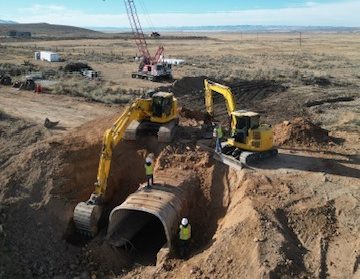
Utility trenching is one of the most visible phases of underground utility construction, but there is considerably more involved than excavating a line from point A to point B.
Before digging begins, crews need to account for existing utilities and the approved project plans. Utility locating and marking help identify existing infrastructure and reduce the risk of damaging buried systems.
Once excavation begins, the trench needs to follow the required alignment and depth. Different utilities can have different installation requirements, and multiple systems may need to share a constrained portion of the site.
After the trench is prepared, the appropriate bedding and pipe or conduit installation can take place. The material around the installed utility then needs to be placed and compacted according to the project requirements.
This matters because the trench eventually disappears beneath the finished property.
If the work beneath the surface was not completed properly, the problem may not become obvious until months or years later.
Why Trench Backfill and Compaction Matter
A properly installed utility system still depends on what happens around it.
Backfill placed carelessly or without appropriate compaction can settle over time. If that trench is beneath a parking lot, access road, sidewalk, or other paved area, settlement can eventually create depressions and uneven surfaces.
For underground utility construction, controlled backfilling is therefore part of protecting both the infrastructure and the finished site.
The correct approach depends on the project specifications, material, location, moisture conditions, and intended use of the finished surface. Areas supporting pavement or structures typically require careful attention because movement beneath the surface can affect the improvements above it.
The finished property should not merely look complete. The underlying work should be constructed with the long-term use of the property in mind.
Drainage Is Part of the Underground Infrastructure
One of the easiest mistakes on a commercial project is treating drainage as an afterthought.
A commercial development introduces large areas of roofs, pavement, parking, and compacted ground. These surfaces can change natural runoff patterns and increase the importance of planned water management.
Commercial underground construction often includes drainage infrastructure that works together with surface grading to move water safely through the property.
That may involve:
- Stormwater collection systems
- Underground drainage pipes
- Culverts and crossings
- Inlets and outlets
- Subsurface drainage
- Graded swales and drainage channels
The surface and underground systems have to work together. A beautifully graded parking lot can still experience drainage problems if the collection and discharge infrastructure does not function as designed.
Great Divide Earthworks provides commercial drainage services designed to address water movement as part of broader site development and excavation work. Commercial Drainage Services
Why Coordination Matters on Commercial Projects
Commercial construction involves multiple contractors, schedules, plans, inspections, and material deliveries. Underground work sits directly in the middle of many of those moving parts.
A utility installation may need to coordinate with:
- Civil engineering plans
- Survey control
- Building foundations
- Road and parking grades
- Stormwater plans
- Electrical and communications systems
- Existing utilities
- Future landscaping
- Construction schedules
That makes communication especially important.
A strong underground utility construction process should account for the next stage of construction rather than treating each trench as an isolated assignment.
For example, a utility contractor or excavation contractor should understand where future pavement will be installed, where building connections need to occur, and how drainage will move across the completed site.
That coordination can help reduce conflicts, unnecessary excavation, and schedule disruptions.
Choosing a Contractor for Commercial Underground Construction
When comparing contractors, price is only one part of the decision. The underground portion of a commercial project can affect everything built on top of it.
Ask potential contractors:
- What types of commercial excavation projects do you handle?
- How do you coordinate underground utilities with site grading?
- How do you approach existing utility conflicts?
- How are trenches prepared and backfilled?
- How do you coordinate drainage with finished grades?
- What equipment is available for difficult or large-scale excavation?
- How do you communicate changes or unexpected site conditions?
- Can you coordinate with surveyors, engineers, inspectors, and other project teams?
A contractor’s ability to communicate clearly and coordinate the underground scope can be just as important as the equipment used to excavate it.
For broader information about how Great Divide approaches commercial site preparation, excavation, grading, and infrastructure, visit its commercial site development services. Commercial Site Development Services
The Underground Work Determines How the Finished Site Performs
When a commercial development is complete, most people never think about what is beneath the pavement or landscaping. That is usually a good thing.
The best underground utility construction becomes almost invisible because the systems work as intended.
Water reaches the building. Wastewater leaves the property. Stormwater moves where it should. Electrical and communications infrastructure remains protected. Parking lots and access roads stay stable.
Achieving that result requires more than excavation. It requires coordination between earthwork, utilities, drainage, grading, materials, and the overall construction plan.
For developers and contractors planning a project in Western Wyoming, the underground portion of the job deserves the same level of attention as the finished building.
Frequently Asked Questions
What is included in commercial underground construction?
Commercial underground construction can include trench excavation, water line installation, sewer systems, stormwater drainage, electrical conduits, utility connections, bedding, backfill, and related site preparation. The exact scope depends on the project’s engineering plans and utility requirements.
Why is proper trenching important for commercial developments?
Proper trenching establishes the required alignment and depth for underground infrastructure. It also provides the conditions needed for proper bedding, installation, and backfill. Mistakes can create utility conflicts, settlement, drainage problems, or costly rework.
What types of underground utilities can an excavation contractor install?
Depending on the project scope, underground utility construction can include water lines, sewer systems, stormwater drainage, and electrical or communications conduits. Great Divide Earthworks provides these types of underground utility services for residential, commercial, and municipal projects.
Why does drainage need to be coordinated with underground utilities?
Drainage systems depend on proper elevations and planned flow paths. Underground pipes, surface grading, parking areas, buildings, and other infrastructure need to work together so water can be collected and directed appropriately.
How should I choose a commercial excavation contractor in Wyoming?
Look for a contractor with experience in commercial excavation, site development, underground utilities, drainage, and challenging site conditions. Clear communication, appropriate equipment, project coordination, and a proven approach to excavation and utility installation are all important factors.
Building the Infrastructure That Supports the Finished Property
The most important work on a commercial development is not always the work customers can see. Beneath the finished pavement and buildings is an infrastructure system that has to function reliably every day.
From underground utility construction and commercial excavation to drainage, grading, and site preparation, every part of the underground scope contributes to the performance of the finished property.
Great Divide Earthworks supports commercial and municipal projects throughout Alpine and Western Wyoming with excavation, site development, underground utility installation, drainage, land clearing, and related earthwork services.
If you’re planning a commercial development, the best time to address underground infrastructure is before the project reaches the surface.
Ready to Plan Your Commercial Site?
Planning a commercial development in Alpine or Western Wyoming? Great Divide Earthworks can help coordinate the excavation, underground utilities, drainage, and site preparation required to move your project forward.
Contact Great Divide Earthworks to discuss your project and schedule a site consultation. Contact Great Divide Earthworks