
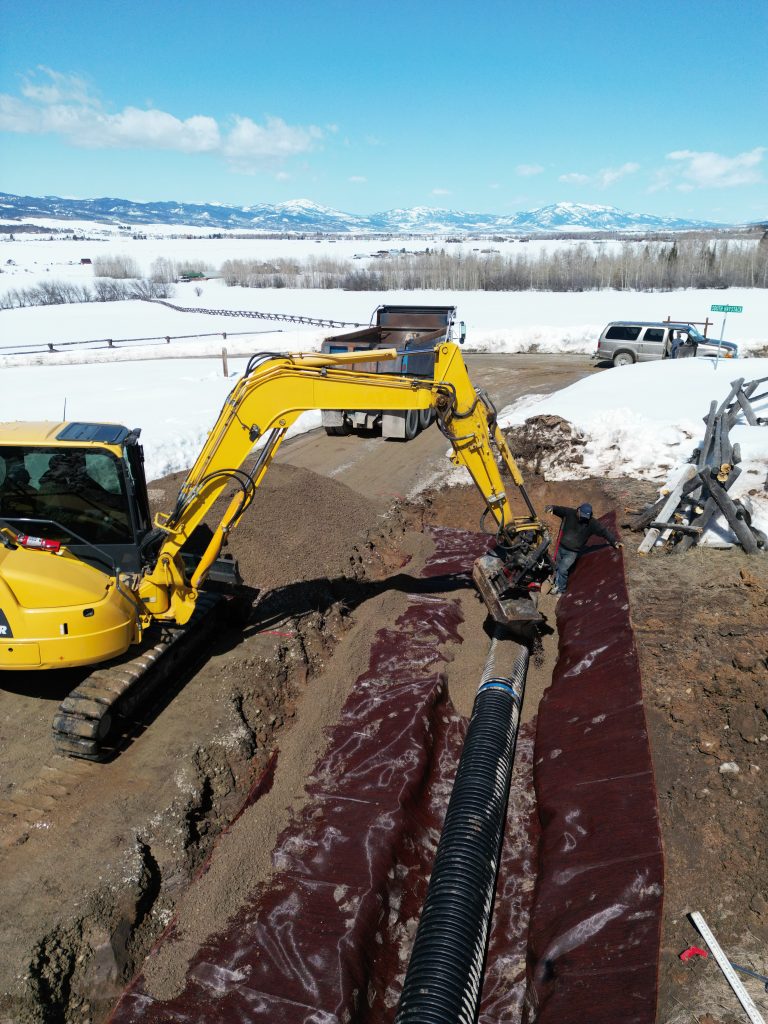
Residential Backyard Drainage Solutions & Storm Drainage Systems in Alpine, WY & Surrounding Areas
When planning residential and commercial developments around Alpine, WY, ignoring property drainage can cost far more than money. Water that doesn’t flow properly can damage foundations, erode soil, and lead to long-term maintenance headaches. As a developer or builder, spotting signs of poor drainage early means you can implement effective residential drainage systems and residential storm drainage solutions before issues escalate.
At Great Divide Earthworks LLC, we specialize in tailored drainage planning and execution for properties in Alpine, Thayne, Etna, Afton, and the greater Lincoln County area. This guide identifies common drainage problems, explains what causes them, and outlines the best solutions for residential developments in our region.
Why Proper Drainage Matters for Alpine, WY Properties
Water management is more than a landscaping concern. In Alpine and the surrounding valley areas, snowmelt and seasonal storms make surface and subsurface water movement a crucial design factor. Poor site drainage can:
- Compromise foundations and slabs
- Cause interior moisture issues
- Trigger soil instability
- Increase landscape and exterior maintenance
Successful projects integrate drainage early. Refer to our Commercial Site Development services in Alpine, WY for guidance on drainage that supports lasting structural integrity.
Signs of Poor Property Drainage
Knowing what to look for helps you catch problems before they become costly. These signs highlight where surface water and groundwater are not leaving the property as intended.
Persistent Water Pooling After Storms
When water remains pooled in low spots long after rain or snowmelt, the site isn’t conveying surface flow effectively. This can indicate grading issues or inadequate stormwater removal. For help with site evaluation, check out our Residential Excavation services in Alpine, WY.
Soggy or Muddy Lawns
Areas that stay wet and soft signify that runoff is not draining. Over time, persistent sogginess can kill turf and promote soil compaction, both of which hurt long-term site performance.
Soil Erosion and Washouts
If water is moving across the surface faster than the soil can absorb it, you’ll see eroded patches or channels forming in yards, driveways, or landscaping beds. This is a clear sign that grading and water conveyance need reevaluation.
Foundation Dampness, Cracks, and Efflorescence
Water that sits near foundations can eventually penetrate or push against walls, leading to interior moisture, stains, cracks, or white mineral buildup. These are early warning signs of hydrostatic pressure issues that require immediate attention.
Musty Odors and Mold Growth
Moisture that settles in basements, crawl spaces, or under slabs encourages mold and mildew. Even without visible water, a damp smell often points to hidden drainage problems.
Overflowing Gutters and Improper Downspout Discharge
When roof runoff isn’t directed into a dedicated stormwater pathway, it soaks into the surrounding soil near the foundation. Assess gutter and downspout routing and consider extensions or connections to a storm drainage network.
Ice Buildup in Winter
In Alpine, WY winters, water that pools and then freezes becomes ice patches by walkways and driveways. While this seems seasonal, it signals recurring drainage issues.
Common Drainage Problem Causes
Understanding the root causes helps you prescribe solutions that last.
Improper Site Grading
Water always follows the path of least resistance. If site grading slopes toward structures or retains depressions, water will accumulate in the wrong places.
Poor Soil Conditions
Clay-rich soils and compacted earth have low infiltration rates, meaning water stays on the surface longer and exacerbates pooling.
Blocked or Undersized Drainage Components
Gutters, downspouts, and storm inlets that are clogged or too small cannot handle runoff from intense rainfall or rapid snowmelt.
Landscape Features Blocking Flow
Hardscape elements like retaining walls, patios, or driveways that lack integrated drainage channels can obstruct water movement.
Effective Residential Drainage Solutions in Alpine, WY
Once you spot the signs of poor drainage, the right solutions depend on the site conditions and design goals.
Focused Site Grading and Sloping
Proper grading is fundamental to any drainage plan. Almost every issue stems from water not being guided correctly. Sloping ground away from foundations immediately reduces standing water risk.
Explore our Land Clearing & Grading services in Alpine, WY to prepare sites that drain well from the outset.
French Drains and Trench Systems
A French drain, a gravel-filled trench with a perforated pipe, collects and redirects subsurface water away from problem areas. These systems are especially useful where water collects along foundations or below grade.
Catch Basins and Subsurface Conveyance
For sites with frequent heavy storms, catch basins connected to drainage pipes efficiently collect surface flow and carry it to designated outfalls or storm sewer connections.
Dry Wells and Infiltration Solutions
Dry wells capture excess runoff and allow it to percolate back into the soil slowly. These work well in areas with adequate soil absorption capacity.
Rain Gardens and Green Infrastructure
Rain gardens enhance drainage while adding visual appeal. These shallow planted depressions capture surface runoff and support slow infiltration.
Roof Drain Extensions and Stormwater Paths
Directing roof runoff away from structures and into drainage channels prevents saturation near foundations. Simple gutter extensions often make a big difference.
Local Considerations for Alpine & Surrounding Areas
In Alpine, Etna, Afton, and Thayne, snowpack melt and seasonal storms require planning that accounts for both surface and subsurface water loads. Working with a local expert ensures your drainage design fits the specific soil types and weather patterns here.
For tailored planning, see our Underground Utilities & Drainage services. We integrate drainage with utilities installation for cohesive site performance.
When to Call a Professional
Not all drainage issues are obvious. If you notice any of the following, it’s time to bring in a professional:
- Water pooling near foundations after every storm
- Interior moisture or basement dampness
- Recurring erosion or soil washouts
- Ice patches consistently forming near walkways
- Soft or spongy lawn areas that never dry out
Why Early Detection Saves Time and Money
Drainage problems only get worse over time. Addressing them early prevents foundation damage, landscaping loss, and costly repair work. For development projects, early drainage planning is part of smart site design that enhances value and longevity.
Strong Local Call to Action
If you’re planning new construction or retrofitting an existing property in Alpine, WY, Etna, Thayne, or Afton, and you’ve identified any of these signs of poor drainage, don’t wait.
Contact Great Divide Earthworks LLC Today
📍 Serving Alpine, WY & Surrounding Areas
📞 (307) 886-5557
📧 info@greatdivideearthworksllc.com
Our team provides expert residential backyard drainage solutions, storm drainage systems, and full site work planning to keep your property dry, stable, and protected year-round.
Visit our services pages:
🔗 Residential Excavation
🔗 Commercial Site Development
🔗 Underground Utilities & Drainage
🔗 Land Clearing & Grading
Frequently Asked Questions
What’s the first sign of a drainage problem?
Persistent water pooling or soggy spots after rain indicate that water isn’t being carried away effectively.
Can poor drainage affect foundations?
Yes. Standing water near foundations increases hydrostatic pressure, leading to cracks and water infiltration.
How does a French drain help?
French drains collect subsurface water and redirect it away from structures, reducing soil saturation.
Are rain gardens effective in storm drainage?
Yes. Rain gardens slow water flow and increase infiltration while adding landscape appeal.
When should developers plan drainage systems?
Drainage planning should happen during initial site design, before construction begins.